No to War…& No to RSF Militias in Sudan: A Research Piece by Omaya Yousif Hassan Abu Fadya Calling for Lasting Peace & Democratic Governance in Sudan
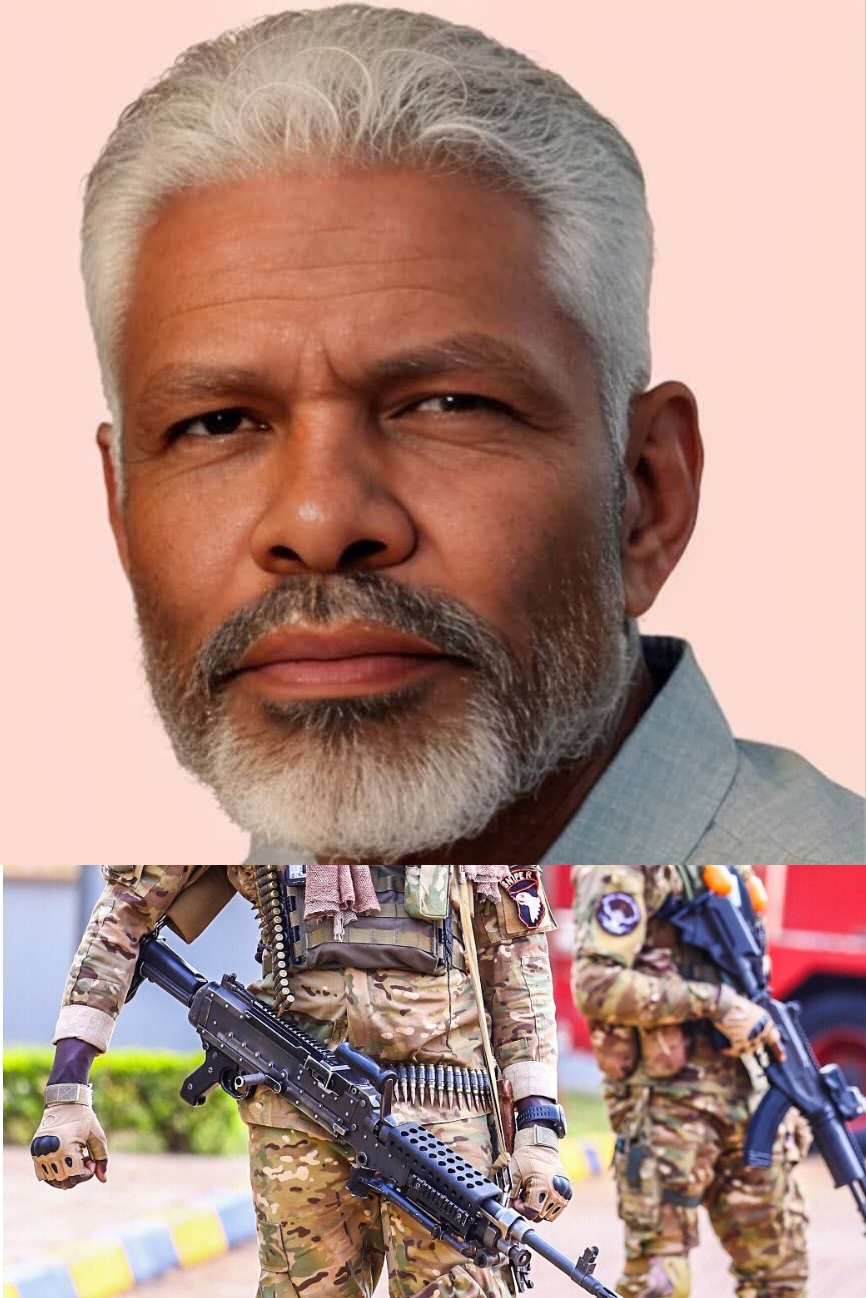
"No to War… and No to Militias: A Vision for a Just, Lasting Peace and a Democratic State in Sudan
Introduction
The slogan “No to War” has long echoed across Sudan since the early days of conflict — a phrase human in essence, yet limited in meaning and impact. Noble as it may sound, the slogan has neither saved a child nor spared a life since Sudan’s latest tragedy erupted on April 15, 2023. What renders it incomplete is its silence on the other half of the equation: the militia. War in Sudan is not merely a clash of armies, but a struggle between "the project of a state and the project of chaos;" between a National Lawful Army (SAF) and an Unlawful Militia-Terrorist group (RSF-"Janjaweed"); between Sovereign Institutions and
Regional Interests seeking to dismantle Sudan and Profit (Gold,Oil Critical Minerals like Rare Earth Elements 9REEs Resources) from its suffering.
Since 2013, the seeds of danger became visible with the rise of the Rapid Support Forces (RSF)—a military formation born out of remnants of the Janjaweed, notorious for their record of atrocities in Darfur. Over time, this militia evolved into a political and economic power center, armed and financed, operating beyond and at times against the state. In such a reality, how can the slogan “No to War” produce peace, when an armed faction continues to kill, terrorize, and plunder under the banner of authority or foreign patronage?
From the Roots of the Crisis to the Moment of Explosion
To understand Sudan’s current tragedy, one must look to its historical and political roots. Since independence in 1956, the state has suffered structural dysfunction and the absence of a unifying vision of justice and citizenship. Each military coup plunged the nation deeper into instability, until violence became an accepted political instrument.
The most dangerous shift came with the birth of the RSF. Instead of maintaining a single, disciplined national army, a parallel force was created under the pretext of combating rebellion in Darfur. Gradually, the RSF expanded into an autonomous entity with its own finances and cross-institutional loyalties. From that point onward, the balance of power within Sudan began to fracture, and the state became threatened from within.
Since 2013, the militia’s behavior has followed a consistent pattern: systematic violations of human rights, killings, looting, arbitrary detentions, and the imposition of control by force. With every abuse, the state retreated a step further, until the militia was formally legitimized as a political partner after the December 2019 revolution.
The 2019 Revolution: Between Hope and Betrayal
When Sudanese citizens took to the streets in December 2018, their dream was clear: freedom, peace, and justice. The revolution’s central slogan expressed a collective yearning for a modern civil state. Yet this dream was soon shattered. The turning point came in June 2019, when RSF forces brutally dispersed the peaceful sit-in at the General Command in Khartoum—a massacre that shook the nation’s conscience. Hundreds were killed or disappeared; survivors and cameras documented scenes of unimaginable brutality.
From that moment, the chant “The army to the barracks, and the Janjaweed must be dissolved” became not just a political demand but a foundational principle for rebuilding the state. Yet the civilian forces failed to enforce it. The country entered a fragile transition that ultimately collapsed into open war in April 2023.
The War of April 2023: The Struggle Between the State and the Militia
When war broke out on April 15, 2023, it became clear that the RSF was not a national force in any sense. It had transformed into a regional proxy, serving the agendas of external actors seeking leverage in Sudan. Rather than defending the homeland, the militia embarked on a campaign of destruction—targeting infrastructure, undermining central authority, and sowing division among communities.
When the Sudanese Armed Forces (SAF) withdrew from regions such as West Darfur, Al-Jazirah, Sennar, and White Nile, it was an attempt—perhaps a reflection of the “No to War” principle—to spare civilians a devastating confrontation. But what followed was not peace; it was humanitarian catastrophe. The militia unleashed systematic ethnic cleansing against defenseless civilians—killing, looting, raping, and displacing thousands in scenes reminiscent of Rwanda and Bosnia.
The atrocities committed in Darfur and El-Fasher surpassed imagination. International human-rights organizations condemned them as potential war crimes and crimes against humanity. Yet, some political voices at home and abroad still promote “peace talks” with the very perpetrators—pretending that the executioner can suddenly become a partner in peace.
“No to War… and No to Militias”
Given these realities, the slogan “No to War” must be redefined. True peace is not achieved by a mere ceasefire, but by restoring the state’s full sovereignty, disarming militias, and ensuring accountability for all who have committed crimes. Hence, the complete and honest slogan today must be:
“No to War… and No to Militias.”
To uphold this principle is to reject the logic of force, the militarization of politics, and the rewarding of criminals with positions of power. Sudan has tried that path repeatedly—from the Naivasha Agreement of 2005, to Abuja in 2008, to Juba in 2020—and every time it produced the same result: legitimizing rebellion and eroding citizenship.
A peace built on fragile bargains with warlords is a false peace, for it plants the seeds of the next conflict. How can a victim who has lost family, or whose daughter was raped, or whose village was burned, trust a state that pardons the killer and grants him a seat in government? Justice is not a luxury—it is the very condition of enduring peace.
Regional and International Dimensions
Sudan’s crisis cannot be separated from the volatile regional context of the Horn of Africa—a space exploited by states that wish Sudan and its people no good. For decades, this region has been a theater of competition among regional and global powers, each pursuing its interests through local proxies. Tragically, the RSF has become one such instrument, backed with money and weapons by actors who view a weakened Sudan as an opportunity to extend influence.
Turning Sudan into an arena for proxy wars serves only the enemies of regional stability. A country of Sudan’s size, strategic location, and natural wealth must not remain a pawn in others’ games. Restoring national sovereignty and building a unified, professional army representing all Sudanese is therefore imperative.
The international community also bears responsibility. Its hesitant posture and failure to act decisively against the RSF’s crimes have emboldened the militia. Instead of imposing meaningful sanctions on its leaders and foreign sponsors, the world has settled for diplomatic statements—thereby prolonging the war and deepening civilian suffering.
Humanitarian and Social Consequences of the War
The conflict that erupted in April 2023 has produced an unprecedented humanitarian disaster in modern Sudanese history. According to United Nations estimates, more than 14.5 million people have been displaced internally or forced to flee across borders—a staggering figure that reflects the scale of devastation. Cities once vibrant with life now lie in ruins; fertile fields that fed the nation have turned into battlegrounds.
Beyond the physical destruction, the war has torn the social fabric itself. It has reignited ethnic and regional divisions, as identity was weaponized for mobilization and hate propaganda. In Darfur especially, the militia revived the rhetoric of ethnic cleansing, targeting specific communities in a grim replay of the atrocities of the early 2000s.
Yet amidst the devastation, Sudanese society has displayed remarkable resilience. Grassroots resistance committees, volunteer networks, and youth groups have become the front line of humanitarian response, filling the void left by a collapsing state and an indifferent international system. This collective solidarity offers a glimmer of hope that Sudan can, once again, rebuild itself from the ashes.
The Road to Lasting Peace and a Democratic State
Any credible project for peace in Sudan must begin with a clear principle: there is no place for militias in the future of the country. A modern state cannot function with multiple centers of armed power or competing loyalties. The national army must be rebuilt on professional, inclusive, and constitutional foundations, and all armed formations must be either integrated or dissolved under the law governing the regular forces—without compromising justice.
Peace must also be comprehensive, not a power-sharing deal among elites. It begins with acknowledging victims’ suffering, compensating them, and holding perpetrators accountable. Transitional justice is not a slogan; it is the cornerstone of genuine national reconciliation.
Politically, Sudan must return to the democratic path—through free elections once security is restored, and through a permanent constitution that enshrines separation of powers and prevents political interference in the military institution.
Conclusion
Sudan’s experience has proven that slogans alone cannot bring change. “No to War” without “No to Militias” is a half-truth, for war is merely the symptom of unchecked militias. Peace is not achieved by wishful thinking, but by political will, justice, accountability, and the restoration of the state’s monopoly on legitimate force.
To proclaim today “No to War… and No to Militias” is to affirm faith in Sudan’s only viable path: the democratic state of law and institutions, not a state of individuals and allegiances. It is a call to end the bleeding—not through resignation to reality, but through confronting its roots.
The peace we seek is not the silence of fear, but the peace of justice; not the calm of submission, but the serenity of dignity and freedom—a peace in which no criminal is rewarded, and no victim is forgotten.
"That is the only path toward a homeland worthy of our renewed hope."
Credits to:
Mr.Omaya Yousif Hassan Abu Fadya
Researcher and Strategic Expert on Horn of Africa Affairs
6 November 2025
Compiled by:
Muhoro Pius W.
K254 Media Africa's Investigative Journalism Desk.
You can Visit our K254 Security Compass magazine on LinkedIn via : https://www.linkedin.com/showcase/k254-security-compass-magazine
For Investigative Journalism- investigations@k254nairobinews.com including Corruption,Theft, Gender Based Violence (GBV),Sexual Violence, Rape,Cyber Crime and many more.
For Trade,Peace & Security Business,Energy,Climate,Mining and International Trade Editorials.
Email: editor@k254nairobinews.com
If you believe we offer Quality informative Updates,
You can Donate to Support K254 Editorial Services in Enhancing Far & Wide Global Reach!DONATE via Cards,Mobile Money,Mpesa,Apple Pay, and all other Global Payment Systems anytime.
Consider using our Pay-Stack Link: https://paystack.com/pay/donate-to-support-k254-editorial-services
Share Widely
&
Join our Whatsapp Channel Today via this WhatsApp Link: https://whatsapp.com/channel/0029Va6X8XU7IUYOibsk5Sk3M for Latest Updates in Global Opportunities, Jobs Local & Abroad, Tenders & Study Scholarships as well what we do in Elevating & Strengthening Brands across Africa & the Globe.
Reach out to K254 Editorial Desk via: editor@k254nairobinews.com to get your Company Featured etc.
For Investigative Journalism- investigations@k254nairobinews.com including Corruption,Theft, Gender Based Violence (GBV),Sexual Violence, Rape,Cyber Crime and many more.
For your Adverisements & Marketing Needs ,Reach out to: ads@k254nairobinews.com
ADVERT!
Register Today for the "1st Africa Public -Private Partnerships (PPP) Summit 2026!"- #1stAPPPS2026
Scheduled for June 24th-26th,2026
❇️For Delegates Registration & Attendance Use this Link: https://docs.google.com/forms/d/1FHqBp0ggc1E8ABTeoA9GZv4eXMIoErqD1w5-1W-XQfE/viewform(i.e: VIP-$2000, Delegates-$1000, & Government Reps-$1000)
By 10th May 2026
❇️For Exhibitors Use this Link: https://docs.google.com/forms/d/1uuN-M9kf7BXgEoOQuAZ08BeYPlGUcybDDM1YFF6pYP4/viewform
By 10th May 2026
❇️For Concept Paper Contributors Use this Link: https://docs.google.com/forms/d/1nCsx8OdYACh_tb5_6QkfBApFlZSR00xLzAk1A_x38lM/viewform
By 30th March 2026
❇️For Media & Business/Trade Journalists: https://docs.google.com/forms/d/1Ly-760v5VVjiEddKxxGEJlhr27_g7oaWektenfJKxAc/viewform
By 31st May 2026
❇️SPONSOR our Event /Partner with Us: https://docs.google.com/forms/d/1Ly-760v5VVjiEddKxxGEJlhr27_g7oaWektenfJKxAc/viewformBy 20th April 2026
(NB: We have Tailor Made Sponsorships starting from as low as $15,000)
Keep Tweeting #1stAfricaPPPSummit2026 #1stAPPPS2026 #PPP #PublicPrivatePartnerships #Summit #Africa #K254MediaAfrica
For More info:
Call/WhatsApp: +254 719 802 192
Email: africa-summit@k254nairobinews.comFor Direct PPP Summit Payments (i.e: VIP-$2000, Delegates-$1000, & Government Reps-$1000),Consider: https://paystack.shop/pay/k254-africa_ppp_summit_2026
If you believe we offer Quality informative Updates,
You can Donate to Support K254 Editorial Services in Enhancing Far & Wide Global Reach!
MPesa Paybill: 880 100
Account Number/Name: 000 254
Amount: $10 or any-infinity
Confirmation!
NCBA Bank:
"K254 Media Conglomerate Africa Ltd"
You can Now Pay Us via Cards,Mobile Money,Mpesa,Apple Pay, and all other Global Payment Systems anytime.
Consider using our Pay-Stack Link: https://paystack.com/pay/donate-to-support-k254-editorial-services
OR
International Payments-International Transfers:
ACCOUNT NAME; K254 MEDIA CONGLOMERATE AFRICA LTD
ACCOUNT NUMBER; 92 83 14 00 18
BANK NAME; NCBA BANK
BANK CODE; 07
BRANCH NAME; NCBA HOUSE
BRANCH CODE; 102
SWIFT CODE; CBAFKENX
K254 Media Services:
We Offer:
- Media/Event Coverage,Interviews,Public Relations-PR, Press Release Publication & Distribution, Digital Marketing,
- Website/Mobile-App/ERP/POS/SEO/ Google Business Maps & ICT System-Software Development Services,
- Cloud Computing services,Webhosting, Photography, Video Production,Animation (Cartoons,Adverts),Drone Services, Green Screen,
- Branding & Designing,Logo Making,Business Cards, Printing, Editorial & Publishing Services,
- Bulk Sms, Language Translation, Voice-Over Services,
- Billboard Advertising, TVc & Radio Advertising,
- Business Expos/Events Planning & Management, Sound Systems/Public Address & Lightings;
and All other Advertising Services
Email: services@k254nairobinews.com
©K254 Nairobi News
By:
©K254 Media Africa
[A Lead Strategic Media, PR, Marketing & Advertising, Events Management, Research, Data Analytics, AI, ICT & Innovation, Graphics Design, Climate Sustainable Solutions, Investigative Journalism and Advocacy Across Africa & Globally ]
Motto: "Elevating Brands"
"Elevate your Brand's Impact across Africa & the Global Dynamic Markets. Talk to us now"
Call/WhatsApp: +254 792 002 265
Email: info@k254nairobinews.com
Website: https://K254nairobinews.com
You can also Join our WhatsApp Community to access various Beneficial Whatsapp Groups relating to your areas of Interests via this Whatspp link: https://chat.whatsapp.com/BtZa5DLryxABRpxHcLVlM7
Follow Us On:
Facebook | Twitter(X) | Instagram | YouTube | WhatsApp Channel | Tik Tok | LinkedIn | Telegram | Truth Social | Threads | Rutube | & all other social platforms