Key Outcomes and Discussion Points : Amendments to the Kenya PPP Act & Regulations:
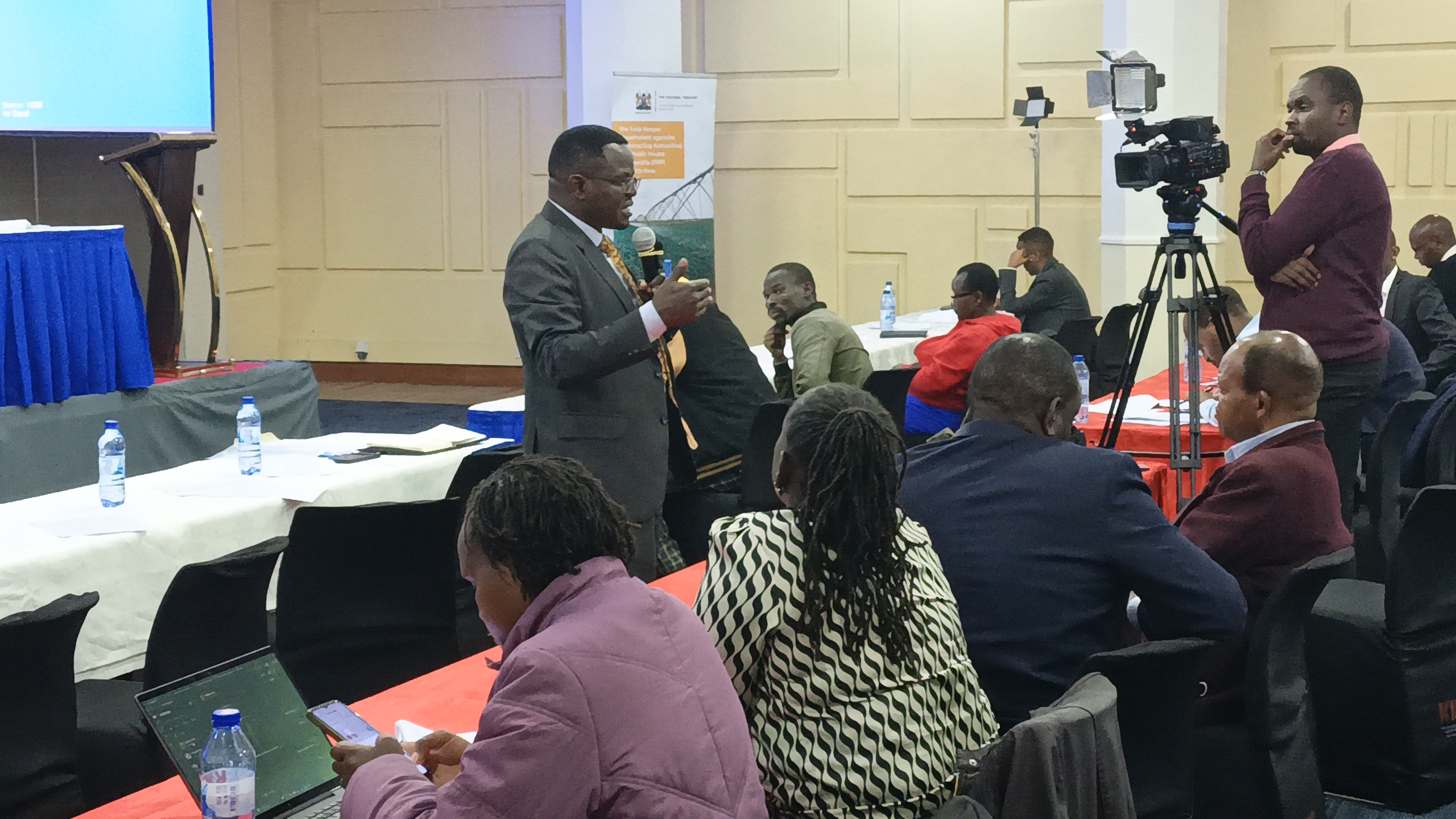
Kennedy, a capacity building expert at the Public-Private Partnership (PPP) Directorate, discusses several key outcomes and points regarding public-private partnerships in Kenya:
Key Outcomes and Discussion Points
Amendments to the PPP Act & Regulations:
The PPP Act 2021 (which previously overhauled the 2013 Act) is undergoing minor amendments to further streamline and shorten the project delivery process [01:04].
Both the PPP General Regulations and the PPP Project Management Regulations are currently under review [01:22].
Public Participation: The Directorate is conducting public sensitization and engagement sessions to fulfill constitutional public participation requirements and collect feedback from Kenyans on these revisions [00:44].
Efficiency and Timelines:
Overhauling and updating the legislation aims to significantly reduce the time required to complete PPP projects from start to finish [02:08].
The current timeframe (around 18 months) is considered very efficient compared to global standards [02:34], with projects like the Nairobi Expressway and the Rironi–Mau Summit road serving as examples [02:45].
Public Awareness & Asset Ownership:
Retaining Ownership: The Directorate is enhancing public outreach to correct misconceptions about public assets being given away [03:46]. Public assets remain government property during and after concession periods; only commercial rights are conferred to private parties [04:02].
Educational sessions are being integrated into public engagements to help the public better understand PPP processes [04:44].
Alternative Financing to Address Fiscal Space:
Due to limited government fiscal space, PPPs provide an alternative financing mechanism to deliver infrastructure projects without straining public funds [05:22].
Role of the National Infrastructure Fund (NIF):
The National Infrastructure Fund (NIF) and the Project Facilitation Fund act as complementary tools to support infrastructure [06:02].
Funding Mechanism: The NIF is a government fund—not a public stock/share program—financed by government initiatives such as selling stakes in state corporations [07:03].
Sustainability: The NIF reinvests its money into infrastructure projects to generate income and remain self-sustaining [06:22].
During this Public-Private Partnership (PPP) Q&A session with stakeholders and the Director General (DG) of the PPP Directorate, participants discussed proposed updates to the PPP Act and regulations.
Key Questions & Answers from the Director General (and Directorate)
1. Public Disclosure, Civil Society, and Vested Interests
Stakeholder Concern: Representatives raised concerns about the role of civil society and third parties in project decisions—questioning why feasibility studies are approved before public disclosure [05:04]. Additionally, a participant raised the issue of "obstructionist litigation" and vested interests (e.g., employee resistance at Kenya Airports Authority) delaying major national infrastructure projects [07:32].
DG/Directorate Response:
The DG acknowledged that public interest, transparency, and statutory rights like public participation must be balanced against risks like bad-faith litigation or corruption [08:30], [16:12].
Private investors and lenders conduct deep due diligence on project costs, and public engagement measures are structured to manage these risks while ensuring legal compliance [16:53].
2. PPP Law vs. Public Procurement Law & Professional Roles
Stakeholder Concern: A procurement practitioner argued that standard procurement practitioners (regulated under the Public Procurement and Asset Disposal Act) must be explicitly captured in the PPP documentation to manage procurement aspects [11:10].
DG Response:
The DG clarified that PPP is a distinct, highly specialized field separate from traditional public procurement [13:40].
Just as traditional public procurement has its own governing act and specialists, PPPs are governed by dedicated PPP legislation. The Directorate handles these specialized frameworks independently rather than forcing traditional procurement laws onto PPP structures [13:21].
3. Technology Parameters & Concession Durations
DG Clarification (Section 23):
When evaluating parameters for fast-evolving projects (such as ICT tech infrastructure), Section 23 of the PPP framework outlines specific parameters to evaluate cost, implementation time, and technology lifespans [00:15]. These criteria determine appropriate project terms and timelines [00:28].
4. Government Support Measures (GSM) in Feasibility Studies
Stakeholder Question: Whether Government Support Measures (under Regulation 62) should be formally listed as a mandatory component during initial feasibility studies [10:07].
DG/Directorate Response:
Foreign investors and international lenders assess country risk differently than local institutions [14:22].
Identifying potential government support measures during early feasibility stages is essential to properly profile project risks and make required applications to the Cabinet Secretary (CS) before negotiating with private bidders [15:00].
Under Kenya’s Public-Private Partnerships (PPP) Act (2021) and its accompanying regulations, feasibility studies serve as the primary foundational tool used by Contracting Authorities (CAs) and the PPP Directorate to test project viability, establish financial bankability, and allocate risks prior to tendering.
1. Risk Allocation in Feasibility Studies
The PPP Act mandates that a full feasibility study must identify, analyze, and allocate all potential project risks throughout the lifecycle of the infrastructure or service contract.
Principle of Optimal Risk Allocation:
Risks are allocated according to the fundamental principle that a specific risk should be assigned to the party best equipped to manage, mitigate, or absorb it at the lowest cost:
Private Sector Risks: Typically includes design, construction, technology obsolescence, operational performance, maintenance, and financing risks.
Public Sector Risks: Includes political risk, statutory or legal changes, land acquisition and right-of-way clearance, site access, and un-mitigatable regulatory delays.
Shared Risks: Includes force majeure, extreme environmental factors, or severe macroeconomic shocks, which are usually managed through pre-agreed contractual risk-sharing mechanisms.
Quantitative Risk Assessment:
The study uses tools like the Public Sector Comparator (PSC) to compare the total lifecycle costs and risk profile of delivering the project through conventional public procurement versus a PPP structure. This ensures that transferring specific risks to the private partner yields demonstrable Value for Money (VfM) for the public.
2. Government Support Measures (GSM)
Government Support Measures (GSMs) are mechanisms provided by the National Treasury or Government of Kenya to mitigate risks that the private sector or international lenders cannot accept on commercial terms.
Identifying GSM Needs Early:
As highlighted during PPP legislative reviews, potential GSMs must be profiled early during the feasibility stage rather than added late in negotiations. Foreign investors and multilateral lenders assess Kenya's country risk and sector exposure differently; identifying these needs early ensures realistic financial modeling.
Types of Government Support Measures:
Depending on the risk profile identified in the feasibility study, GSMs may include:
Direct Financial Support: Grants, viability gap funding (VGF), or capital contributions.
Guarantees & Indemnities: Sovereign guarantees, Minimum Revenue Guarantees (MRGs), or letter of comfort to cover political risk, expropriation, or currency transferability.
Operational Support: Guarantees on land availability, site access, or utility connections.
Approval & Fiscal Commitment Controls:
To prevent unmanaged contingent liabilities for the national government:
Fiscal Risk Assessment: The feasibility study must quantify the maximum financial exposure of the requested support.
PPP Committee & National Treasury Approval: The Contracting Authority must formally apply to the Cabinet Secretary (CS) for Finance and National Treasury via the PPP Committee to grant support measures.
Inclusion in Bidding Documents: Once approved, authorized support measures are explicitly built into the tender documents so all prospective private bidders compete on transparent terms.
Compiled by:
Muhoro Pius W.
Business,Energy,Climate,Mining,PPP, AFCFTA,Diplomacy,Security,Tourism and International Trade Editor
Reach out to K254 Editorial Desk via: editor@k254nairobinews.com to get your Company/Org/Story Featured etc.
For Investigative Journalism- investigations@k254nairobinews.com including Corruption,Theft, Gender Based Violence (GBV),Sexual Violence, Rape,FEMICIDE, Cyber Crime and many more.
You can also Join our WhatsApp Channel Community to access various Beneficial Whatsapp Updates relating to your areas of Interests via this Whatspp link: https://whatsapp.com/channel/0029Va6X8XU7IUYOibs5Sk3M
You can Call/WhatsApp: +254 719 802 192 for Website Design Services, Digital Marketing , Social Media Mgt & PR Services in Africa & Globally.
Email: services@k254nairobinews.com
©K254 Media Africa